 NeuroWellness
Preparing Your Nervous System for the Shift into Autumn
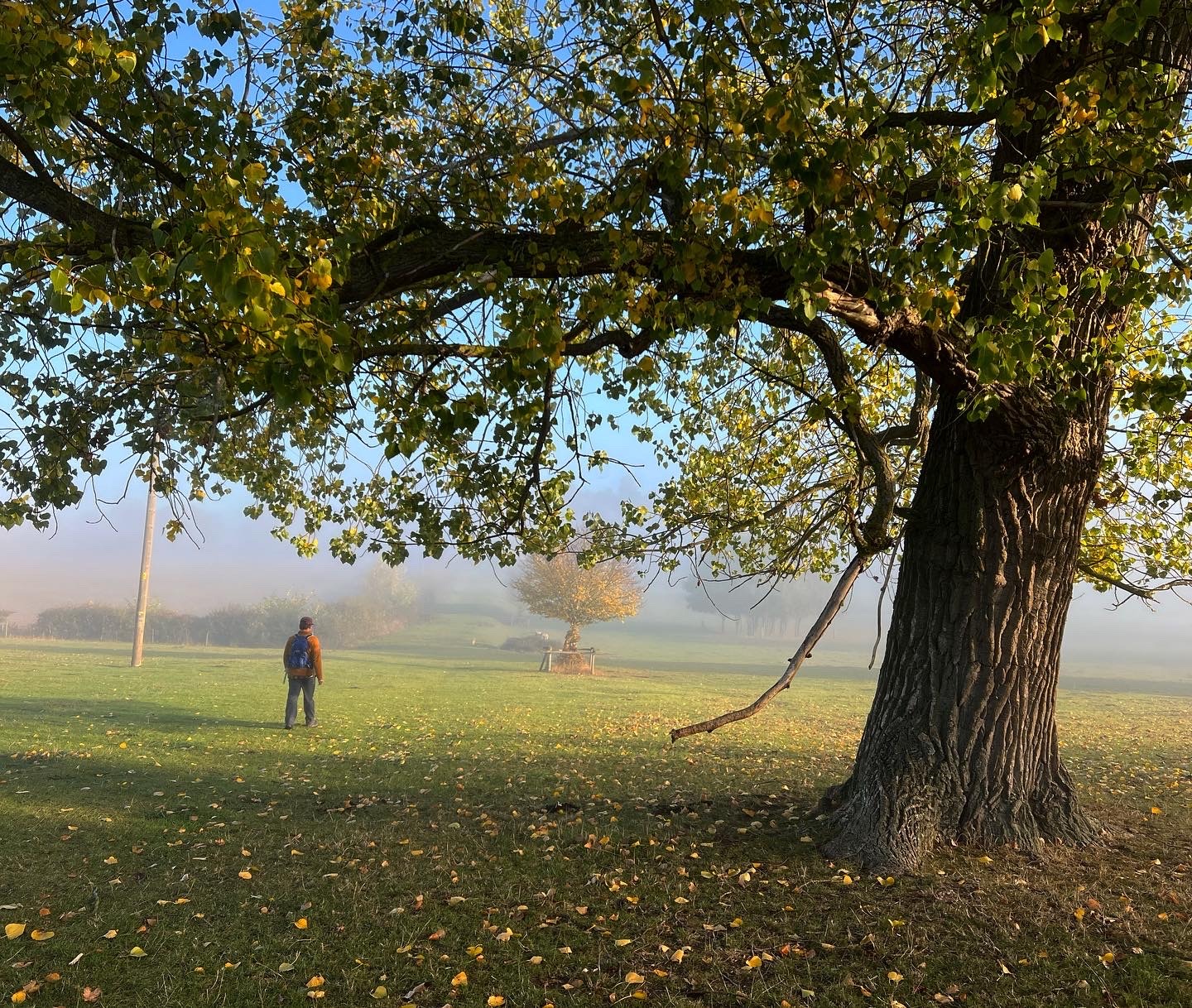
There is a moment each year when the season begins to change before we have quite caught up with it.
The mornings feel different.
The evenings arrive earlier.
There is a cooler quality to the air.
We reach for another layer.
And somewhere beneath the busyness of everyday life, the body begins to notice:
The light is changing.
It's changing faster this week than at any other point in the year. Around the equinox we lose close to four minutes of daylight a day — roughly half an hour a week. By the middle of October you'll be living in noticeably less light than you were in August, even if nothing else about your life changes at all.
The Autumn Equinox, this Tuesday, marks the point when day and night are approximately equal in length, before the balance gradually tips towards longer nights and shorter days.
Our bodies are deeply responsive to light, temperature and daily rhythms. As daylight changes, so do some of the environmental cues that help regulate our sleep-wake cycle, hormones, alertness and behaviour.
But there is another shift that often happens at this time of year.
We start asking more of ourselves again.
Summer slows down and suddenly the diary fills.
Work becomes busier.
Classes restart.
Social commitments return.
There are plans to organise, projects to finish and an invisible pressure to make the most of the final months of the year.
And this creates an interesting tension.
One part of us may be ready to turn inward. Another part is being asked to speed up.
So how do we prepare the nervous system for autumn without either withdrawing completely or pushing ourselves into overdrive?
Follow the light
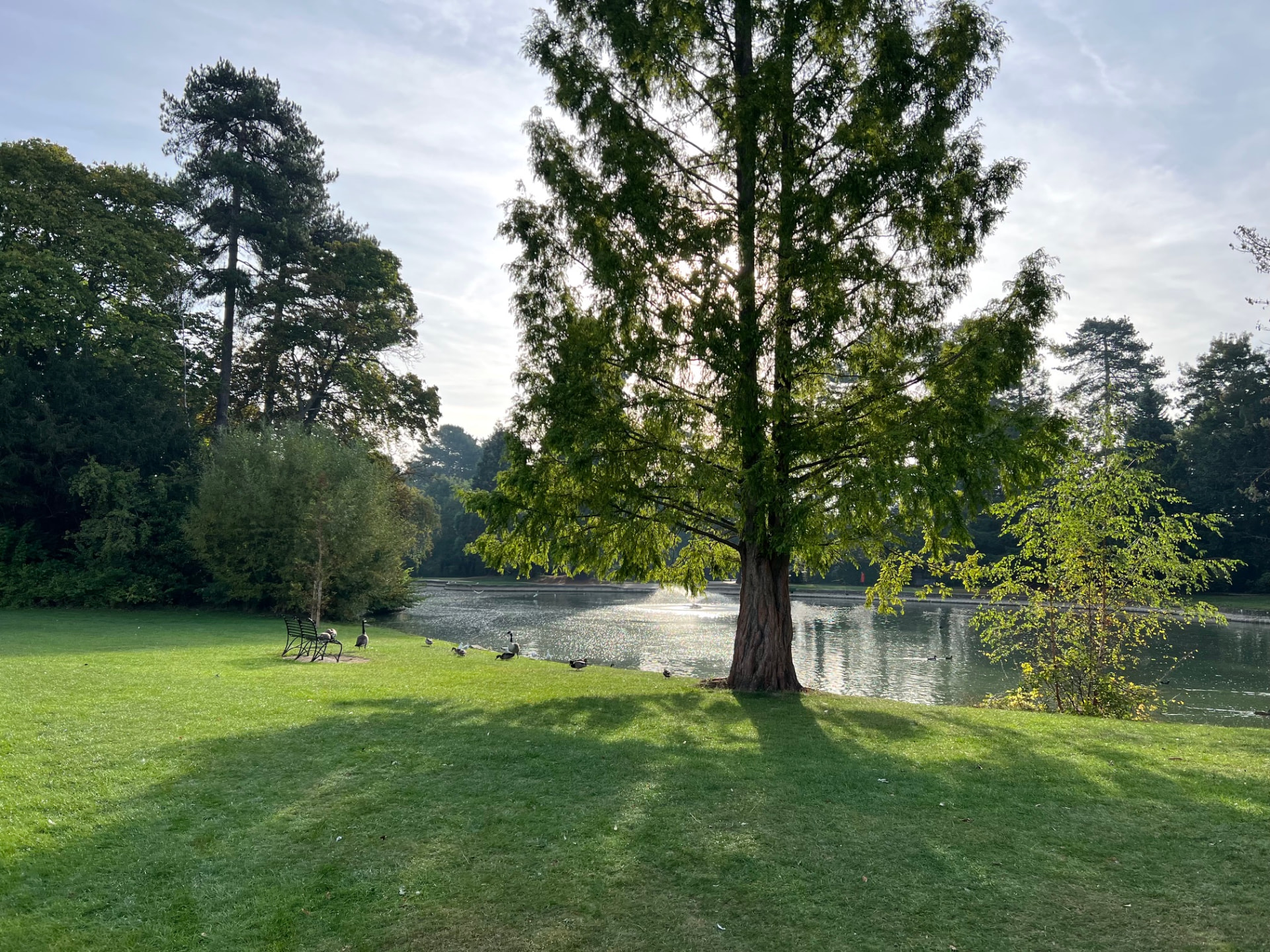
Light is one of the strongest environmental signals influencing our circadian rhythm, and morning light matters most. It's the signal your body uses to set the timing of the day ahead — when you feel alert, when melatonin rises in the evening, how well you sleep that night.
As the days become shorter, our exposure to natural light changes, and then we tend to make it change further. When it's dark and cold at seven, we don't go outside. We put the kitchen light on instead.
That's a bigger difference than it looks. Indoor lighting is a small fraction of the brightness of even a grey morning outdoors. Your body is reading light levels, not weather.
So one simple autumn practice is to get outside early in the day, whenever you can.
Open the curtains.
Step outside in the morning, even for ten minutes.
Take a walk rather than staying indoors for the entire day.
Let your eyes receive natural daylight rather than beginning and ending every day under artificial light.
One more thing worth knowing: your body clock is set in the morning rather than at night. Keeping your wake time reasonably steady, weekends included, holds the rest of your rhythm in place while the light moves around you. It's less demanding than it sounds, and it does more than an earlier bedtime.
It doesn't have to be a wellness project.
Just notice the sky.
Notice the trees.
Notice the changing quality of the light.
Your body is constantly gathering information from its environment.
Two wrong answers
What I watch happen at this point in the year falls into two camps, and they look like opposites.
The first is to hibernate.
There is something very human about wanting to slow down as the evenings draw in. You may naturally feel more drawn towards home, warmth, nourishing food, earlier nights and quieter evenings.
Rather than immediately labelling this as laziness or lack of motivation, you might experiment with listening to it. Perhaps your body is asking for more recovery.
But an unplanned withdrawal can make things worse rather than better. Less daylight, less movement and less company all weaken the signals that are already weakening, and the flatness settles in deeper.
The second is to speed up.
More plans.
More work.
More commitments.
More coffee to keep going.
More pressure to finish everything before winter.
This one usually works. For about six weeks. Then something gives, and it is rarely convenient about when.
Both are a refusal to change rhythm. One tries to stop the year. The other tries to outrun it.
And this is where awareness becomes useful.
Ask yourself:
Am I genuinely energised by what I'm doing — or am I overriding the signals that I need to slow down?
There is no perfect autumn routine. What you're looking for is a rhythm between activity and restoration.
Cortisol doesn't need to become the villain
Cortisol is often described negatively, particularly in the wellness world.
But cortisol is not something we need to fear. It's an essential hormone involved in many processes, including energy regulation and the body's response to stress. It naturally follows a daily rhythm, generally being higher around waking and declining as the day progresses.
The challenge isn't having cortisol.
The challenge is when our lifestyle continually asks the body to respond to stress without enough opportunity for recovery.
That might look like waking already thinking about your to-do list, rushing through the morning, staying switched on all day and then wondering why your body can't suddenly relax at bedtime.
Autumn can therefore be a useful moment to reconsider your daily rhythm.
Where does your day begin? Where does it end? And where, within it, does your nervous system get to breathe?
If you're in your forties or fifties
Autumn often lands harder, and there's a reason for it that has nothing to do with willpower.
Sleep is already more fragile when progesterone is becoming unpredictable, and progesterone has a calming effect on the brain that you gradually lose as it falls. Temperature regulation is already less reliable if flushes or night sweats are part of your picture. Add a fast-moving light environment on top of a rhythm that is already unsettled, and there is simply less margin than there was five years ago.
That's not a reason to expect less of yourself. It's a reason to be deliberate about the signals, because the same things still work.
They just need doing on purpose rather than happening by accident.
A practice for the transition
I've recorded something for exactly this moment: Is Your Body Ready for Autumn? A 15-Minute Nervous System Reset.
Belly breathing, humming, some gentle work with the arms and ears, and then several minutes lying down doing nothing at all.
That last part is the one everybody wants to skip, and it's the part that does the work. The rest of it brings you down. Lying still is where you stay down long enough for your body to remember how.
Watch the 15-minute autumn reset →
And for the minutes in between
The practice I reach for when there isn't fifteen minutes is 4–7–8 breathing. It's simple, portable and needs no equipment.
The traditional pattern is:
Inhale gently for 4. Hold for 7. Exhale slowly for 8.
Repeat for several rounds, staying comfortable rather than forcing the breath.
The extended exhale is the part I want you to notice. A longer out-breath than in-breath is a direct signal to the vagus nerve that it's safe to come down, and you can usually feel your heart rate respond within two or three breaths. Rather than trying to breathe deeply or dramatically, allow the breath to become slow, quiet and unforced.
If holding the breath doesn't feel comfortable for you, don't force the 7-count. You can adapt the practice by simply making your exhale longer than your inhale.
Use it at the end of your working day, before bed, or any time you notice yourself moving into that familiar state of I need to keep going.
Create an autumn rhythm rather than another routine
Perhaps the most supportive thing you can do this season is resist the temptation to turn autumn into another self-improvement project.
You don't need a perfect morning routine.
You don't need another list of things to optimise.
Instead, consider creating a few anchors.
Morning: natural daylight and movement.
During the day: nourishing food, hydration and moments away from your screen.
Evening: lower stimulation, softer light and a little more space between doing and sleeping.
Throughout the week: somewhere to consciously practise slowing down.
Because nervous system regulation isn't something we master once.
It is something we practise. Again and again.
Make space for the season you're actually in
Autumn doesn't ask us to stop living. It asks us to notice rhythm.
There will still be busy days and deadlines, and days when you need to show up, work hard and keep moving.
But you don't have to live every day at the same speed.
There can be movement and stillness.
Effort and release.
Activity and deep rest.
The equinox is a reminder that balance isn't about everything staying equal. It's about responding to change.
So as the season turns, perhaps ask yourself:
What am I ready to release? What needs nourishing? And where could I create a little more space for rest?
You don't have to wait until you're exhausted to begin.
Your nervous system can be supported in the ordinary moments of your week.
If you'd like somewhere to practise with other people
Practising on your own works. Practising in a room with other women, with someone else holding the time, works differently — you settle faster when you aren't also watching the clock.
Gathering Inner Warmth — Sunday 27 September, 10:00–11:30, Ravensden Village Hall. Breath, gentle somatic practice and deep restorative rest, built around this exact shift into autumn. £25, or £45 for two if you'd like to bring someone.
Gathering Inner Warmth
Join Sunday morning's 90-minute autumn practice at Ravensden Village Hall.