 NeuroWellness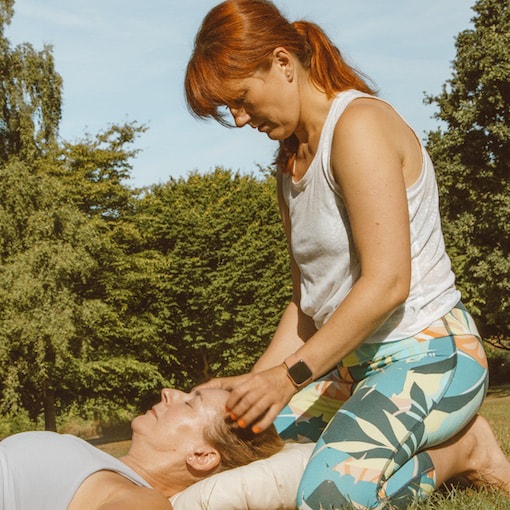
What this work is
Your body is not separate from your thoughts, your stress, or your history. It holds all of it — in the tension you carry across your shoulders, in the way you hold your breath before a difficult conversation, in the exhaustion that sleep alone doesn't fix.
Somatic gentle movement is the practice of tuning in. Of learning to notice what your body is saying — not to fix it immediately, but to listen first. To bring conscious, patient attention to the sensations, the patterns, the places where tension has been living quietly for months, sometimes years.
This is not exercise in the conventional sense. There is no pushing. No performing. No measuring effort by how much you feel it the next day.
This is something quieter — and, in my experience, far more powerful.
Why I work this way
Most of my clients are women in their mid forties, fifties and beyond. And over the years, one thing has become clear to me: the body does not need more force. It needs more space.
I have watched what happens when women are given permission to slow down — genuinely slow down — and meet themselves where they actually are. The change is significant. Not because of what I teach them, but because of what they begin to hear in themselves.
We live in a culture that equates effort with value. More intensity, more output, more pushing through. I have seen too many women injure themselves following that logic — physically, and in subtler ways too. The body, when it is already under stress, does not respond well to being pushed harder.
It responds to being heard.
This is why I work the way I do. Slowly. Patiently. With full attention to each person in the room.
What happens in a session
Every session is built around three principles:
Interoception — Learning to sense your internal landscape. Your heartbeat, your breath, the feeling of tension or ease in different parts of your body. This is a skill, and like all skills, it develops with practice.
Mindful observation — Noticing what is present without immediately trying to change it. No judgment. No urge to fix. Just an honest, curious attention to what the body is actually doing.
Embodied processing — Understanding that your thoughts, memories, and emotions are not only held in the mind. They live in the body too. And movement — gentle, intentional movement — can help release what talking alone sometimes cannot reach.
The vagus nerve connection
Every practice on this page has something in common: it stimulates the vagus nerve.
The vagus nerve is the longest cranial nerve in the body, running from the brainstem through the heart, lungs, and gut. It is the primary pathway of the parasympathetic nervous system — the system responsible for rest, repair, and digestion. When vagal tone is low, as it tends to be in people living under chronic stress, the nervous system struggles to return to calm after a stressor. Recovery is slow. Sleep is difficult. The gut is unsettled.
When vagal tone improves, so does everything else.
Slow, conscious breathing stimulates the vagus nerve directly. So does gentle movement, body awareness, and restorative rest. This is not a wellness concept — it is physiology. And it is precisely why a gentle, intentional practice can do what pushing harder never can.
The practices
Sessions draw from a range of approaches, woven together according to what the group or the individual needs:
Breathwork — Slow, intentional breathing to calm the nervous system, anchor presence, and create space between sensation and reaction.
Grounding exercises — Bringing awareness to the body's contact with the floor, the chair, the earth — a simple and remarkably effective way to return to the present when the mind has moved elsewhere.
Body scan — A guided journey of attention from the feet to the crown of the head, identifying where the body is holding and where it is at ease.
Somatic movement — Gentle, mindful movement that integrates sensation with motion. Not choreographed. Not demanding. Guided by what the body needs rather than what looks correct.
Restorative yoga — Supported, unhurried postures that allow the nervous system to genuinely downregulate. This is rest with intention — and it is more restorative than most people expect. It is conscious rest.
Who this is for
This work is for you if you have been running on adrenaline for too long and your body is beginning to tell you so. If you are tired in a way that rest doesn't fix. If you have spent years managing your body rather than listening to it.
You do not need to be fit, flexible, or experienced with any of these practices. You need only be willing to slow down and pay attention.
How we work together
I offer somatic gentle movement in small group sessions — an intimate setting where you move at your own pace within a supportive space — and on a one-to-one basis for a more personalised approach.
One-to-one sessions allow us to work directly with what is present for you: your history, your nervous system, your pace. Nothing is assumed. Everything is tailored.
Explore the 12-Week Return→Get in touch — book a free discovery call→One nervous system. One body. One you.